Price Action FOCUS
Speculate on rising or decreasing prices of shares, regardless of ownership.
Leverage POWER
Amplify your potential returns with strategically applied leverage.
Hedging STRATEGY
Manage risk and diversify your portfolio with CFDs alongside other assets.
Expert INSIGHTS
Access valuable research, analysis, and trading tools to make informed decisions.
Market-leading Shares pricing
Standard spread pricing, no commissions
| SYMBOL | SELL | BUY | SPREAD |
|---|---|---|---|
| AUDUSD | -2.34 | -1.91 | 0.91 |
| CADCHF | -1.09 | -5.03 | 0.91 |
| CADJPY | -3.00 | -4.40 | 0.91 |
| EURAUD | -9.16 | 2.30 | 0.91 |
| EURCAD | -9.00 | 2.50 | 0.91 |
| EURCHF | -2.00 | -4.00 | 0.91 |
| EURGBP | -3.90 | -1.00 | 0.91 |
| EURJPY | -5.11 | -2.01 | 0.91 |
| EURTRY | -1100.00 | 550.00 | 0.91 |
| EURUSD | -5.00 | 0.00 | 0.91 |
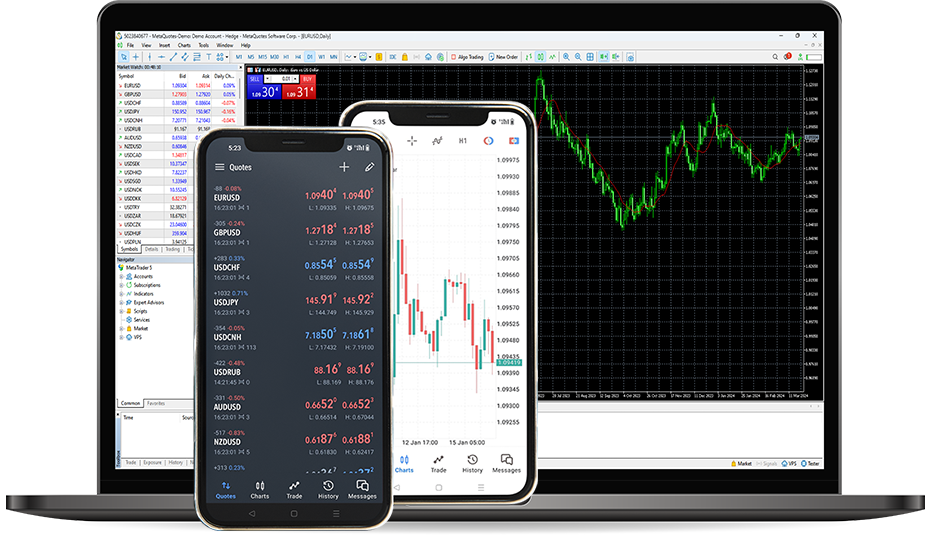
Trade Shares with Powerful MetaTrader 5 Features
Go long or short on company shares with comprehensive technical analysis tools, automated trading capabilities, and a user-friendly interface provided by MetaTrader 5.
AVAILABLE ON
Amplify Your Share Trading: Explore Shares CFDs
What are Shares CFDs?
Why Trade Shares CFDs?
How to Trade Shares CFDs?
Start trading now!
Spreads lower than ever! START trade with a trusted broker!
Shares CFDs FAQs
What are share CFDs?
Share CFDs (Contracts for Difference) are derivatives that track the performance of a company's share price, allowing you to speculate on its price movements without physically owning the underlying shares.
- Gain exposure to individual stocks: Trade the performance of a specific company without actually owning the shares.
- Leverage (potential benefit and risk): Some brokers offer leverage, allowing you to control a larger position with a smaller investment, potentially magnifying both profits and losses.
- Hedging: Use CFDs to hedge against potential losses in your underlying portfolio of shares.
Can I use stop-loss orders with share CFD trading?
Stop-loss orders can be valuable tools to manage risk in volatile markets like share CFDs.
- Automatic exit: These orders automatically close your position when the price reaches a pre-determined level, helping to limit potential losses if the market moves against you.
- Types of stop-loss orders: Various types exist, including market orders (immediate execution at available price) and limit orders (execution only at a specific price or better).
- Important consideration: Stop-loss orders do not guarantee a specific exit price, especially in highly volatile markets.
What's the difference between trading Stocks and CFDs for Stocks?
While both offer exposure to the stock market, they differ significantly in several key aspects.
- Ownership: With stocks, you become the direct owner of the underlying company's shares, granting you voting rights and the potential to receive dividends if the company distributes profits. In contrast, CFDs are contracts speculating on price movements; you don't own the shares and have no voting rights or dividend eligibility.
- Leverage: When buying stocks, you invest your own capital, and your potential losses are limited to your investment. However, CFDs may offer leverage, allowing you to control a larger position with a smaller investment. While this can amplify potential profits, it also magnifies potential losses, potentially exceeding your initial investment.
- Fees and Costs Typically, stocks involve commission fees per trade and potential custodial fees for holding shares. CFDs generally avoid commission fees, but they incur costs like spreads (the difference between buy and sell prices), overnight financing fees if holding positions overnight, and broker fees depending on the specific platform.